Do you need to showcase your services or sell directly online? Answer three questions and compare the two types of website.
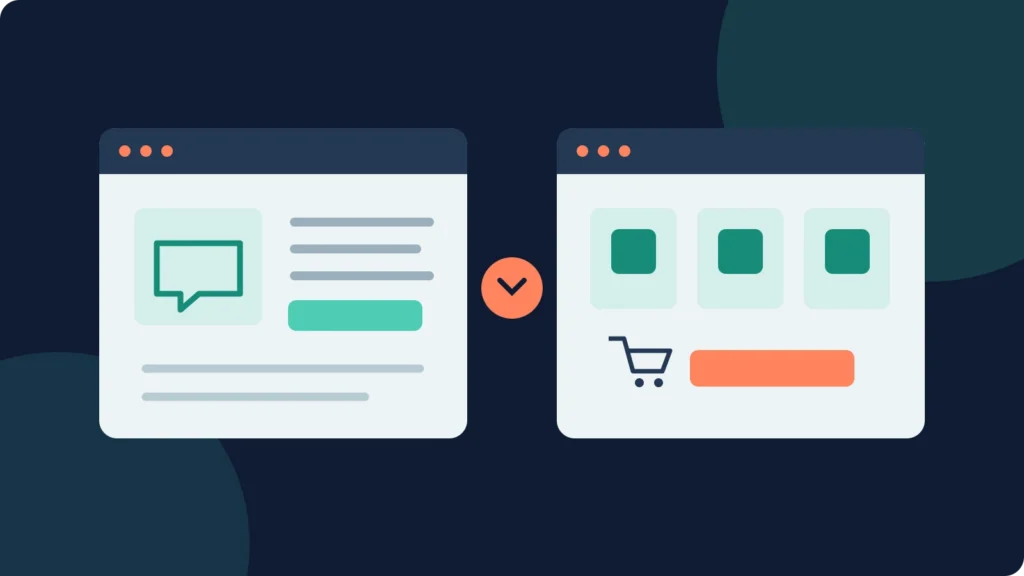
Should you create a showcase website or an e-commerce site? The right choice depends on what you want visitors to do: understand what your business does and get in touch with you, or select products and pay directly online. Both formats can be effective, but they require different budgets and different organisational set-ups.
To help you decide, answer three questions: do your customers need to pay online? Does your product range change frequently? Do you have the resources to manage orders, stock, delivery and after-sales service? Your answers will guide your choice and help you avoid paying for features you don’t need.
What is a showcase website?
A showcase website presents a business, its services, its portfolio, its contact details and its benefits. Its main aim is to build trust and generate enquiries: calls, requests for quotes, bookings or visits to the shop. It is often suitable for tradespeople, consultants, agencies, construction professionals and service providers.
A good showcase website is not limited to just a home page. It may include a page for each service, an introduction to the team, case studies, genuine testimonials, an FAQ section and a contact form. This structure helps visitors understand what’s on offer and provides search engines with more specific pages to index.
What is an e-commerce website?
An e-commerce website allows you to showcase products, manage a shopping basket and receive orders. Depending on the project, it may incorporate payment methods, delivery options, stock management, vouchers, transactional emails, customer accounts and tax rules.
An online shop therefore requires more than just a visual catalogue. The business must organise its products, set delivery charges and times, draw up terms and conditions of sale, manage returns and deal with customer enquiries. The website is a sales tool, but also an operational process.
Comparison: shop window or e-commerce
| Criterion |
Showcase website |
E-commerce website |
| Main objective |
Present the offering and generate leads |
Selling and managing orders online |
| Key features |
Services pages, case studies, contact form, contact details |
Catalogue, basket, payment, delivery, orders |
| Day-to-day management |
Update information and deal with enquiries |
Manage products, stock, orders and returns as well |
| Indicative initial budget |
Approximately €400 to €1,500, depending on the scope |
Approximately €900 to €3,500 or more, depending on the shop |
| Timeframes |
Often shorter if the content is ready |
Longer if payment, delivery and the catalogue are complex |
| SEO |
Service pages and local visibility |
Category pages, product pages and editorial content |
| Recurring costs |
Hosting, domain, and any maintenance required |
The same, plus payment charges and any additional tools |
Prices are indicative only and do not constitute guaranteed quotes. The cost varies depending on the number of pages or products, the quality of the content, integrations and any customisation requirements. Transaction fees and any licence fees must be calculated separately.
Three questions to help you choose
1. Should the customer make a purchase without speaking to you?
If the sales process involves an appointment, a phone call, a visit or a personalised quote, a showcase website may be the best place to start. If the customer is familiar with the product, its price and the terms of purchase, the online shop can simplify the ordering process.
Some projects combine both: a catalogue with a ‘Request a quote’ button, or products that can be purchased online alongside services that require a consultation. It is not compulsory to enable payment for every offer.
2. Is your catalogue consistent and easy to manage?
A few products that rarely change are easy to showcase on a showcase website. Hundreds of product listings, with different variants, stock levels, promotions and delivery charges, require a properly organised catalogue. Before launching an online shop, prepare the names, descriptions, photos, prices, product codes and delivery terms.
3. Are you prepared to manage post-sale operations?
An online shop doesn’t just generate sales: it also creates orders to fulfil, payments to reconcile, enquiries to deal with and, sometimes, returns to organise. You need to decide who will be responsible for these tasks and within what timeframe. If these processes aren’t yet in place, a showcase website that accepts requests for quotes may be a simpler way to get started.
What sort of website suits your business?
- Tradespeople or construction companies: A showcase website featuring pages on services, case studies, the area of operation and a quote enquiry form.
- Consultant or agency: A showcase website focusing on expertise, client references, methodology and booking appointments.
- Retailer selling standardised products: e-commerce, provided that prices, stock levels and deliveries can be managed reliably.
- Service provider with bookings: a shop window with a booking system if the customer chooses a time slot rather than a delivered product.
- Hybrid company: a showcase website supplemented by an online shop for products sold directly.
Can we start with a shop window and then add a shop?
Yes, provided the structure is designed to be scalable. WordPress can accommodate a WooCommerce shop at a later stage, but you need to plan ahead for navigation requirements, category structure, performance and management policies. Adding a shop isn’t always as simple as clicking a button: it may require content to be created, payment and delivery settings to be configured, terms and conditions to be drawn up, and thorough testing.
Avoid paying today for features you don’t need, but do let your service provider know your roadmap. This will ensure that the technical choices made do not hinder future development.
What you need to prepare before requesting a quote
For a showcase, prepare a list of services, contact details, text, photos, case studies and the actions you expect visitors to take. For a shop, include the number of products, variants, payment methods, countries for delivery, taxes, returns and existing management tools.
Also specify who will provide the text and visuals, who will import the products, and who will be responsible for updates. Recurring costs must be clear from the outset: domain, hosting, premium extensions, maintenance and any payment processing fees.
Elvis Web offers
Elvis Web offers WordPress solutions tailored to the scope of the project. The Showcase Package may be suitable for a business wishing to showcase its activities and generate enquiries. An e-commerce solution is more appropriate when a product catalogue and ordering process need to be managed. The quoted price must always be confirmed based on the number of pages, content and features selected.
Our aim is to help you choose the format that best suits your needs today, whilst leaving room for future changes. Take a look at the website design services or request a personalised quote.
FAQ: Showcase website or e-commerce site
Can a showcase website generate sales?
Yes, it can generate quote requests, bookings or sales made offline. It simply does not necessarily handle automated payments and orders.
Which website is the cheapest?
A simple showcase website is generally cheaper, as it requires fewer features. An online shop requires more configuration and testing.
How many products do you need to open a shop?
There is no minimum. Even just a few products can justify running a shop if payment and delivery are standardised.
Does WooCommerce require a monthly subscription?
The basic WooCommerce software is free, but you may have to pay for hosting, a domain name, any plugins and payment processing fees.
How can I find out what’s right for my business?
First, define the main action you expect visitors to take and your operational capabilities, then compare the features and the total cost.