Promotana.com: redesign of a property website following a cyberattack
9 November 2026
Jeamis
Elvis Web is supporting Promotana in the redesign of its property website following a cyberattack: security, user experience, content and SEO.
ELVIS WEB CASE STUDY · SECURITY · WORDPRESS REDESIGN
Promotana.com: redesign of a property website following a cyberattack
A compromised website must not simply be brought back online: it is essential to restore it to a sound foundation, rebuild trust and re-establish a useful digital presence. Elvis Web is currently working with Promotana on a complete overhaul of its website, following a security incident.
Restoring a reliable online presence for an estate agency
Promotana is an estate agency based in Madagascar. Its business involves supporting individuals and organisations with their property projects: property searches, sales, lettings and connecting owners with prospective tenants. For an agency of this kind, the website is a strategic point of contact. It enables the agency to showcase its services, highlight available properties and facilitate initial enquiries from clients.
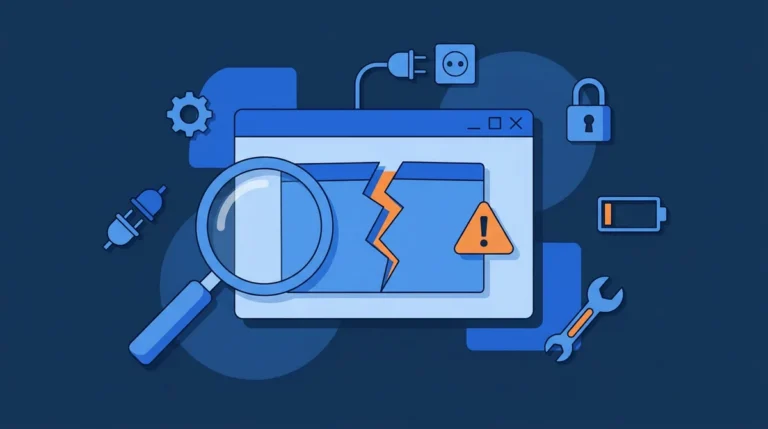
When a website is hacked, it may become unavailable, display unwanted content or lose the trust of visitors. Beyond the technical issue, the company’s entire digital communication strategy may be affected. A prospective customer who encounters a security alert or an unusual page is naturally likely to cut short their visit.
It is against this backdrop that Elvis Web is currently working with Promotana to carry out a redesign of the website promotana.com. The aim is to start afresh on a more reliable footing and to rethink the agency’s presentation, its services and its customer journey.
The aim of the mission
Do not treat the hack as merely an incident to be swept under the carpet. The revamp should also be an opportunity to review the site’s structure, the quality of its content, the mobile experience and its security foundations.
Why a property website must remain accessible and credible
In the property sector, a client’s decision is based on specific information: property type, location, budget, availability, and terms of sale or tenancy. The website must make it easy to find this information and to contact the agency without any hassle. An unreliable online presence can therefore hinder the discovery of listings and the generation of enquiries.
A compromised website also poses a reputational risk. Visitors cannot always tell the difference between a temporary problem and an actual breach. A page that redirects to an unknown site, an unusual message, a suspicious form or a browser warning is enough to raise doubts.
Possible consequence
Effect on the agency
The challenge of the overhaul
Loss of confidence
Visitors are reluctant to continue browsing
Create a clear and reassuring environment
Unavailability
Prospects can no longer find the information they need
Restore stable, monitored access
Altered content
The brand’s reputation may be damaged
Regain control of pages and media
Data risk
Forms and access points may be displayed
Check access rights and strengthen security measures
The priority, therefore, is not simply to restore the display to normal. It is necessary to understand the full extent of the incident, check the affected elements and organise a coherent restoration before bringing the site back online.
After a cyberattack: start with a diagnosis rather than just a clean-up
A hacked website can display a wide variety of symptoms. Some incidents are immediately apparent; others go unnoticed and may affect files, administrator accounts, plugins or configuration settings. Simply deleting a suspicious page or quickly reinstalling the theme is not necessarily enough to resolve the root cause of the problem.
The approach adopted for this type of project begins with a site survey. This involves, in particular, identifying the issues observed, checking the available access points, assessing the technical environment and determining which content or functionalities are to be retained for the new version. The specific actions taken are tailored to the findings made during the project.
STEP 01
Assess the situation
Gather details of the symptoms, the available access points and any known information about the incident.
STEP 02
Securing access
Review accounts, passwords, permissions and potential points of entry.
STEP 03
Improving the environment
Check the relevant files, extensions, themes and settings.
STEP 04
Preparing for the reconstruction
Identify the content to be carried over and the improvements to be incorporated into the new website.
Caution is essential: an old backup may contain the original problem, whilst restoring data too quickly may reintroduce compromised files. It is therefore important to choose which items to recover carefully and, where possible, to keep a copy of the original state for analysis.
Redesign: turning an incident into an opportunity for improvement
The ongoing redesign of Promotana is not simply a matter of changing the colours or modernising the website’s appearance. It aims to organise the information more effectively and make the agency’s services easier to understand. For someone in the property sector, visitors must be able to quickly identify the services on offer and know how to submit their enquiry.
The new editorial structure clearly distinguishes between the main categories: finding a home, selling or letting a property, searching for land, or finding business premises. This structure helps visitors of all types to access the section that corresponds to their specific needs.
Section to be promoted
Information required
Easier to use
Rental
Houses, villas, flats and search criteria
Describe the property you are looking for
Buying and selling
Support for sellers and buyers
Request support
Plots of land
Location, use and characteristics of land
Defining your property project
Commercial property
Offices, commercial premises and other business premises
Contact the agency regarding a business enquiry
The layout of the adverts should also be designed to make it easier to compare properties: clear photographs, key details, location, features and contact details. A well-structured property listing reduces the need for back-and-forth communication and helps the visitor to make a more specific enquiry.
Finally, the mobile experience must be treated as a priority. Many internet users view adverts on their mobile phones. Menus, contact buttons, forms and galleries must therefore remain easy to use on a small screen.
The security features to be incorporated into the new version
A site overhaul following a cyber-attack is also a good time to review maintenance procedures. No website can be considered completely invulnerable, but there are a number of measures that can help reduce risks and enable a more effective response should another incident occur.
Measurement
Why it’s important
Recommended follow-up
Controlled updates
Fix known vulnerabilities and minimise the use of obsolete components
Regular checks for updates
Enhanced access
Minimising the risks associated with compromised accounts
Unique passwords, restricted access rights and two-factor authentication where available
Verified backups
To be able to restore a working version in the event of a problem
Regular backups and restoration tests
Monitoring
Identifying unusual behaviour at an earlier stage
Monitoring alerts, logs and availability
Security does not end with the handover of the new website. It also depends on maintenance, updates, access management and the quality of backups. That is why these issues must be planned for in the long term and not simply dealt with at the time of the redesign.
Search engine optimisation: maintaining the status quo and preparing for greater visibility
When a website is redesigned, it is important not to neglect its SEO. The old URLs may be recognised by search engines or may have been shared by customers. Changing URLs without a redirect plan can lead to 404 errors and result in the loss of some of the signals associated with the old pages.
SEO work involved in a website redesign generally includes compiling a list of URLs, retaining useful pages, writing relevant titles and descriptions, optimising content, and setting up redirects when URLs change. Once the site goes live, it is also important to monitor indexing and any errors flagged by monitoring tools.
For Promotana, content must remain focused on the property needs actually catered for by the agency and on its roots in Madagascar. Pages dedicated to lettings, sales, land and commercial premises can cater to different search intentions. The aim is not to repeat the same keywords everywhere, but to give each page a specific topic and useful information.
An ongoing project: the next steps
The redesign of Promotana.com is currently underway in collaboration with Elvis Web. The project aims to create a clearer, more up-to-date and better-organised website, whilst incorporating the necessary checks and best practices following a security incident.
At this stage, it would be premature to present the project as complete or to announce any results regarding search engine optimisation, traffic or conversion rates. A final assessment can be made once the project has been finalised, the site has gone live and a monitoring period has taken place. This case study will then be updated with screenshots of the new site and the elements that have actually been approved by the client.
What we want to achieve
A property website where visitors can quickly understand the services on offer, access useful information and contact the agency easily, with a maintainable technical infrastructure and appropriate security measures.
HAS YOUR WEBSITE BEEN HACKED?
Don’t just put the home page back online.
Elvis Web can help you diagnose a compromised WordPress site, ensure it is restored to a secure state, and consider a redesign when the old site no longer meets your business needs.
Editor’s note: This case study describes an ongoing re-engineering project. The precise technical details of the incident, the measures actually implemented and the results will be added once the client has approved them and the project has been finalised.